Continuous Line Design of Repairing: Balancing Aesthetic Simplicity with Practical Application
The concept of continuous line design has captivated artists and designers for decades, offering a minimalist yet expressive way to depict complex subjects. When applied to industrial or domestic themes, such as the continuous line design of repairing, it creates a striking visual metaphor for restoration and care. This artistic approach is not merely about drawing; it is about conveying a narrative of mending brokenness through an unbroken stroke. For creators, marketers, and small business owners in the home improvement or plumbing sectors, understanding how to leverage this aesthetic can significantly enhance brand communication. However, integrating such specific artistic assets into professional workflows requires more than just downloading a file. It demands an understanding of format versatility, scalability, and appropriate usage contexts.
Understanding the Visual Metaphor
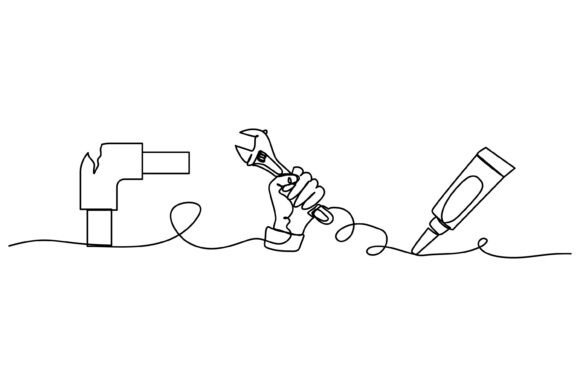
A continuous line drawing of a damaged pipe being repaired using glue serves as a powerful symbol. The single, unbroken line suggests efficiency and seamlessness, qualities highly valued in repair services. Unlike chaotic or fragmented illustrations, this style implies that the solution is straightforward and elegant. For bloggers and educators teaching DIY skills, using such imagery can help demystify complex repairs, making them appear approachable rather than intimidating. The visual simplicity reduces cognitive load, allowing the audience to focus on the core message: that damage can be fixed cleanly and effectively.
However, many users overlook the technical nuances of these digital assets. A common misconception is that all image files are created equal. Whether you are a freelancer designing a logo or a marketer creating social media content, the format you choose dictates the quality and flexibility of your final product. Ignoring these details can lead to pixelated prints, incompatible files for web use, or excessive editing time.
Common Pitfalls in Digital Asset Selection
One of the most frequent mistakes beginners make is assuming that a JPG file is sufficient for all purposes. While JPGs are universal and easy to view, they are raster images, meaning they are made of pixels. If you attempt to scale a JPG of a continuous line design up for a large banner or signage, the lines will become jagged and blurry. This loss of clarity undermines the very essence of continuous line art, which relies on smooth, fluid curves. For professionals, this can result in a perceived lack of quality, affecting client trust and brand reputation.
Another overlooked detail is the background transparency. Many users download standard JPGs without realizing they have a white background baked into the image. If you try to place this image over a colored website header or a textured brochure background, you will end up with an unsightly white box around your design. This limits creative freedom and often requires additional graphic design work to remove the background, wasting valuable time. In contrast, vector formats like SVG and EPS do not have this limitation when used correctly, allowing for seamless integration into various design layouts.
The Importance of Vector Formats: SVG and EPS
To avoid the limitations of raster images, it is crucial to prioritize vector formats such as SVG (Scalable Vector Graphics) and EPS (Encapsulated PostScript). These formats define images using mathematical paths rather than pixels. This means you can resize a continuous line design of repairing from the size of a business card to the side of a van without any loss in quality. For entrepreneurs and small business owners, this scalability is invaluable. It ensures that your branding remains crisp and professional across all touchpoints, from digital ads to physical merchandise.
SVG files are particularly useful for web developers and bloggers. They are lightweight, load quickly, and can be styled directly with CSS code. This allows for interactive elements, such as changing the color of the line on hover, which can enhance user engagement on a website. EPS files, on the other hand, are the industry standard for print professionals. If you are working with a printer for brochures or packaging, providing an EPS file ensures that the lines remain sharp and the colors are accurate. By having access to both formats, you future-proof your design assets and maintain control over their application.
Evaluating Quality and Usability
When downloading or purchasing continuous line art, do not just look at the preview image. Check the file structure. A well-created vector file should have clean paths with no unnecessary anchor points. Excessive points can make the file difficult to edit and may cause issues when cutting vinyl for decals or signs. For hobbyists using cutting machines, a messy vector file can lead to jagged cuts and wasted material. Always inspect the file in a vector editing program if possible, or rely on reputable sources that guarantee clean, optimized paths.
Additionally, consider the complexity of the line. While continuous line art is minimalist, it must still be recognizable. A design of a pipe repair should clearly show the crack and the glue application. If the line is too abstract, viewers may misinterpret the image. Test the design at smaller sizes to ensure it remains legible. This is especially important for mobile users, who may view your content on smaller screens. Clarity should never be sacrificed for the sake of artistic flair.
Practical Advice for Implementation
To make the most of your continuous line design assets, start by organizing your files. Keep separate folders for web-ready SVGs and print-ready EPS files. This prevents confusion and speeds up your workflow. When using these designs in marketing materials, pair them with ample white space. The elegance of continuous line art shines best when it is not crowded by other elements. Let the single line breathe, allowing the viewer’s eye to follow the path of the repair effortlessly.
For educators and content creators, use these visuals to break up text-heavy articles. A well-placed illustration of a repaired pipe can serve as a visual anchor, reinforcing the topic without distracting from the written advice. Ensure that the alt text for these images describes the content accurately, such as "continuous line drawing of a pipe being repaired with glue," to improve accessibility and SEO performance. This attention to detail demonstrates professionalism and care for all users, including those using screen readers.
Making Informed Decisions
Before committing to a specific design or provider, consider your long-term needs. Do you need the ability to modify the line weight or color? If so, vector files are non-negotiable. Are you primarily sharing content on social media? Then high-resolution JPGs may suffice, but having the original vector allows for adaptation if trends change. Evaluate the license terms as well. Ensure you have the right to use the design for commercial purposes if you are selling products or services. Misunderstanding licensing can lead to legal issues and unexpected costs.
In conclusion, the continuous line design of repairing is more than just a decorative element; it is a strategic tool for communication. By understanding the technical differences between file formats and avoiding common pitfalls, you can enhance the quality and effectiveness of your visual content. Whether you are a beginner exploring DIY aesthetics or a professional refining your brand identity, choosing the right assets and using them wisely will yield better results, greater efficiency, and higher satisfaction. Always prioritize clarity, scalability, and proper usage to ensure your designs convey the intended message of seamless restoration.