Dolphin Circle Design: Strategic Visual Assets for Brand Cohesion and Creative Efficiency
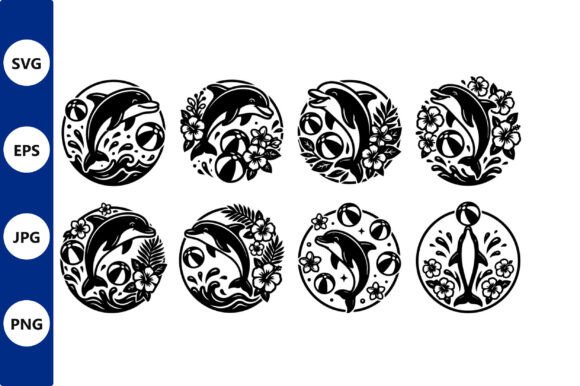
In the saturated landscape of digital content and physical merchandise, visual consistency is not merely an aesthetic preference; it is a fundamental component of brand recognition and consumer trust. The Dolphin Circle Design, characterized by its bold line work and intricate composition of a leaping dolphin, ocean sphere, tropical flowers, and lush foliage, represents more than a decorative vector. It is a versatile asset that, when deployed with strategic intent, can streamline production workflows, enhance brand storytelling, and drive engagement across diverse market segments.
For entrepreneurs, graphic designers, and small business owners, the decision to integrate pre-made, high-quality assets like this into their operations requires a clear understanding of both the design’s inherent strengths and the contexts in which it delivers maximum value. This analysis explores how to leverage this specific black-and-white circular motif to achieve tangible business outcomes, from reducing design overhead to creating cohesive product lines.
The Strategic Value of High-Contrast Vector Imagery
The core appeal of the Dolphin Circle Design lies in its technical execution and stylistic versatility. Rendered in bold black and white, the design utilizes high-contrast line work that ensures legibility and impact regardless of scale. This is a critical consideration for any visual asset intended for multi-channel distribution. Whether applied to a small social media avatar or a large-format wall decal, the clarity of the vector lines maintains integrity without pixelation or loss of detail.
From a branding perspective, black-and-white imagery conveys sophistication, timelessness, and clarity. By stripping away color distractions, the design forces the viewer to focus on form and composition. The circular frame creates a sense of unity and completeness, psychologically signaling wholeness to the consumer. When you incorporate this design into your marketing materials, you are leveraging these subconscious cues to project professionalism and attention to detail.
Furthermore, the inclusion of tropical elements—flowers and foliage—alongside the dynamic motion of the leaping dolphin introduces a narrative of vitality and natural harmony. This duality allows the design to bridge disparate brand identities. It can support a wellness brand emphasizing balance, a travel company highlighting exotic destinations, or an eco-friendly product line focused on ocean conservation. The key is not just using the image, but aligning its symbolic weight with your broader communication goals.
Optimizing Production Workflows with Multi-Format Assets
Time is a non-renewable resource for creators and small business operators. One of the most practical advantages of acquiring a comprehensive digital download package—including SVG, EPS, PNG, and JPG formats—is the elimination of redundant conversion tasks. Each format serves a distinct functional purpose in the production pipeline:
- SVG and EPS files are essential for scalability. They allow for infinite resizing without quality degradation, making them ideal for large-format printing such as banners, vehicle wraps, or storefront signage. These vector formats also enable easy manipulation in design software, allowing you to adjust line weights or isolate specific elements if needed.
- PNG files offer transparency, which is crucial for overlaying the design onto colored backgrounds, photographs, or textured surfaces without unsightly white boxes. This is particularly useful for web design, app interfaces, and custom apparel where the fabric color serves as the background.
- JPG files provide universal compatibility for quick previews, social media posts, and standard document embedding where file size and broad software support are prioritized over transparency.
By having access to all these formats, you reduce the friction between concept and execution. Instead of spending hours cleaning up raster images or tracing vectors, you can immediately begin integrating the design into your mockups and final products. This efficiency translates directly into faster time-to-market for new product launches and more agile responses to trending opportunities.
Application Scenarios and Market Positioning
To maximize the return on investment for this digital asset, it is essential to map its usage against specific customer touchpoints. Random application dilutes brand impact; targeted application reinforces it. Consider the following strategic use cases:
Custom Wall Art and Home Decor
The decorative nature of the tropical foliage and the balanced composition make this design highly suitable for home decor. For sellers in the print-on-demand space, this asset can be used to create framed prints, canvas art, or tapestries. The black-and-white palette ensures that the art fits into various interior design styles, from modern minimalist to bohemian chic. Marketing these items should focus on the emotional resonance of the ocean theme—calm, freedom, and natural beauty.
Personalized Decals and Stickers
Stickers remain a powerful low-cost marketing tool and a popular consumer product. The bold lines of the Dolphin Circle Design ensure that even when printed at small sizes, the details remain visible. Use these decals for laptop branding, water bottles, or car windows. For businesses, offering these as free gifts with purchase can enhance customer loyalty and increase brand visibility in public spaces.
Tattoo Flash and Body Art Inspiration
The clean line work and circular composition are inherently suited for tattoo designs. Tattoo artists often seek high-quality reference material that requires minimal cleanup. By marketing this design to tattoo studios or including it in flash sheets, you tap into a niche market that values precision and artistic merit. Ensure that the licensing terms allow for such commercial use, and position the design as a premium, ready-to-ink option.
Branding for Eco-Conscious Enterprises
If your business operates in the sustainability sector, this design can serve as a secondary logo or a campaign-specific emblem. The dolphin and ocean imagery naturally align with environmental causes. Use it on packaging, thank-you cards, or educational materials to reinforce your commitment to marine conservation. However, ensure that your operational practices align with the message conveyed by the imagery to avoid accusations of greenwashing.
Risks of Unintentional Design Deployment
While the Dolphin Circle Design is a robust asset, relying on it without a clear strategic framework can lead to brand dilution. One common pitfall is overuse. If every piece of collateral features the same prominent graphic, the design loses its specialness and becomes visual noise. Use it as an accent or a signature element rather than the sole focus of every interaction.
Another risk is context mismatch. Placing a tropical, leisure-oriented design on serious financial reports or corporate legal documents would create cognitive dissonance for the audience. Always evaluate whether the tone of the design matches the gravity and purpose of the communication channel. Additionally, ensure that the design does not clash with existing primary brand colors or logos. It should complement, not compete with, your core visual identity.
Finally, consider the saturation of similar motifs in the marketplace. While this specific design is optimized and unique in its execution, the general theme of dolphins and circles is common. To differentiate, pair the design with unique typography, distinctive color accents (if adapting the black-and-white base), or exclusive copywriting. The value lies not just in the image itself, but in how you curate it within your broader brand ecosystem.
Long-Term Integration and Creative Adaptation
To sustain the relevance of the Dolphin Circle Design, approach it as a modular component of your creative toolkit. Do not view it as a static image but as a foundation for iteration. You might experiment with cropping specific sections—the foliage alone, or just the dolphin—to create sub-brands or category markers within your product line. This extends the utility of the single purchase and creates a cohesive visual language across diverse offerings.
Regularly audit the performance of products featuring this design. Track which applications generate the most engagement or sales. Use this data to inform future design acquisitions and marketing strategies. If wall art performs better than decals, shift your production resources accordingly. This data-driven approach ensures that your creative decisions are grounded in reality rather than assumption.
In conclusion, the Dolphin Circle Design is a potent tool for those who understand the interplay between aesthetics and strategy. By leveraging its high-quality vector formats, aligning its thematic elements with your brand values, and deploying it intentionally across appropriate channels, you can enhance your creative output while optimizing operational efficiency. Success lies not in the mere possession of the asset, but in the thoughtful, disciplined application of its visual power to achieve specific business objectives.