Watercolor Woodland Flowers Clipart: A Guide for Designers and Crafters
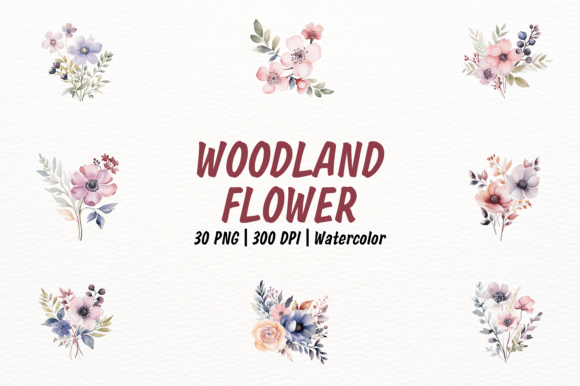
In the realm of digital design and creative crafting, the aesthetic appeal of natural elements remains a perennial favorite. Among these, Watercolor Woodland Flowers Clipart has emerged as a versatile resource for creators seeking to infuse their projects with organic elegance. This specific collection features a set of 30 high-resolution illustrations that capture the delicate nature of botanical life through a hand-painted watercolor style. Understanding the technical specifications, usage rights, and artistic qualities of such assets is crucial for designers, hobbyists, and small business owners who aim to enhance their visual content effectively.
Understanding the Artistic Style and Composition
The term "watercolor" in digital clipart refers to artwork that mimics the traditional medium’s characteristics, including soft edges, transparent layers, and fluid color blending. This particular woodland flowers set emphasizes a harmonious palette dominated by pinks, purples, greens, blues, whites, and yellows. The inclusion of specific flora such as delicate anemones, soft lavender blooms, and vibrant daisies provides a diverse range of floral subjects. These elements are not merely decorative; they serve as foundational design components that can convey themes of freshness, tranquility, and natural beauty.
The artistic value lies in the balance between detail and abstraction. Unlike vector graphics, which offer crisp, mathematical precision, watercolor illustrations retain a textured, organic feel. This texture adds depth and warmth to designs, making them appear more handcrafted and personal. For users evaluating this type of clipart, it is important to recognize that the "imperfections" inherent in watercolor styles—such as gradient shifts and soft petal edges—are intentional features that contribute to the overall aesthetic appeal.
Technical Specifications and File Formats
When selecting digital assets, technical quality is paramount. This collection offers files in two primary formats: PNG and JPG, both at 300 DPI (dots per inch) and a resolution of 3000 x 3000 pixels. The distinction between these formats is significant for different use cases.
- PNG with Transparent Background: The removal of the white background in the PNG files is a critical feature for user convenience. Transparency allows designers to layer the floral elements over any colored background, photograph, or texture without visible borders or awkward white boxes. This is essential for professional-looking compositions in web design, social media graphics, and complex print layouts.
- JPG with White Background: While less flexible for layering, high-resolution JPGs are useful for quick previews or projects where the background is intended to be white. However, for most professional applications, the PNG format is the superior choice due to its alpha channel support.
The 300 DPI resolution ensures that the images remain sharp and clear when printed. This is particularly important for physical products such as wedding invitations, greeting cards, and stickers, where low-resolution images can appear pixelated and unprofessional. The 3000 x 3000 pixel dimensions provide ample space for scaling down without loss of quality, though users should be cautious about scaling up beyond the original size.
Evaluating Usage Scenarios and Applications
The versatility of this woodland flowers clipart set makes it suitable for a wide array of applications. Evaluating whether this asset aligns with your project goals requires considering the specific demands of your intended medium.
Print and Physical Products
For those involved in DIY handicrafts or small-scale printing, this clipart is a strong fit. The high resolution supports the creation of wedding cards, birthday invitations, menus, and baby shower announcements. The natural, organic theme resonates well with events that aim for a rustic, bohemian, or elegant atmosphere. Additionally, the individual elements—such as leaves, petals, and stems—can be used to create custom borders, frames, or backgrounds for paper art and scrapbooking.
Digital Design and Social Media
In the digital sphere, these illustrations can enhance Canva designs, website headers, blog post featured images, and social media posts for platforms like Instagram. The transparent PNGs allow for seamless integration into existing brand templates. Creators can use the floral elements to soften harsh geometric layouts or to add a touch of sophistication to promotional graphics. The delicate nature of the watercolor style often performs well in niches related to wellness, lifestyle, fashion, and handmade goods.
Commercial Considerations
A key aspect of this collection is its licensing terms. The allowance for both personal and commercial use, including the sale of derivative works, makes it a viable option for entrepreneurs. Users can incorporate these images into products they sell, such as printed mugs, t-shirts, or digital planners. However, it is vital to adhere to the restriction against reselling the original image files themselves on stock platforms or marketplaces like Etsy or Creative Fabrica. This distinction protects the intellectual property of the original artist while enabling creators to monetize their own unique designs built upon these assets.
Tradeoffs and Alternative Considerations
While watercolor woodland flowers clipart offers significant aesthetic benefits, it is not without limitations. Designers should consider the following tradeoffs:
- Scalability Limits: Unlike vector files (SVG or AI), raster images like PNGs and JPGs have fixed resolutions. Scaling them significantly larger than their original dimensions will result in pixelation. For large-format prints such as banners or billboards, vector alternatives may be more appropriate.
- Style Consistency: Watercolor styles are highly specific. If a brand’s identity relies on minimalist, flat, or geometric design, these organic illustrations may clash with the overall visual language. It is essential to ensure that the soft, textured look aligns with the target audience’s expectations.
- Color Customization: Adjusting the colors of watercolor images can be challenging compared to vector graphics. While basic hue shifts are possible, maintaining the natural gradients and transparency effects requires advanced editing skills in software like Photoshop. Users needing frequent color variations might find vector clipart more efficient.
Alternatives worth considering include vector botanical illustrations for maximum scalability, photographic elements for hyper-realism, or hand-drawn line art for a minimalist approach. Each option serves different design needs, and the choice should depend on the specific requirements of the project regarding flexibility, style, and output medium.
Making an Informed Decision
Selecting the right clipart involves balancing aesthetic preference with technical practicality. For projects that prioritize a soft, natural, and handcrafted feel, this set of watercolor woodland flowers provides a robust foundation. The inclusion of transparent backgrounds and high-resolution files addresses common pain points for designers, facilitating easier integration into various workflows.
Before purchasing or downloading, users should assess their technical capabilities. Working with layered PNGs requires familiarity with design software that supports transparency. Additionally, understanding the licensing boundaries ensures compliance and avoids legal issues. By carefully evaluating the intended use case, whether for personal enjoyment or commercial enterprise, creators can determine if this watercolor collection meets their specific design objectives. Ultimately, the value of such assets lies in their ability to inspire creativity and streamline the design process, allowing users to focus on composition and messaging rather than creating intricate illustrations from scratch.