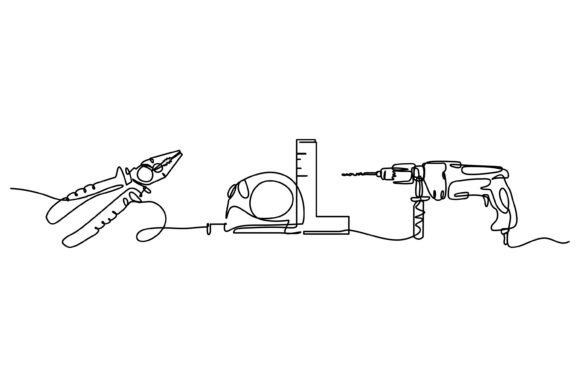
Continuous Line Design of Pliers
In the world of digital art and graphic design, simplicity often speaks louder than complexity. The continuous line design of pliers is a perfect example of this minimalist aesthetic. This artistic technique involves drawing an object without lifting the pen from the paper or the stylus from the tablet. The result is a fluid, unbroken path that captures the essence of the subject—in this case, a pair of pliers—through a single, elegant stroke.
For creators, entrepreneurs, and hobbyists, these designs offer more than just visual appeal. They represent a blend of technical precision and artistic freedom. When you look at a continuous line illustration of tools like pliers, a planer, or a drill bit, you are seeing a reduction of form to its most basic elements. This style has gained significant traction in modern branding, home decor, and educational materials because it feels both contemporary and timeless.
The Appeal of Single-Line Aesthetics
Why choose a continuous line approach over a detailed, shaded rendering? The answer lies in versatility and clarity. A single line decorative element drawn on white creates immediate contrast and focus. There is no background noise, no complex color palettes to manage, and no distracting textures. This makes the image incredibly adaptable for various applications.
Consider the psychological impact. Continuous lines suggest flow, connection, and efficiency. For a business selling hardware or DIY kits, using a continuous line design of pliers can subtly communicate ease of use and streamlined functionality. It transforms a cold, industrial tool into something approachable and artistic. This is particularly valuable for small business owners and marketers who want to soften their brand image while maintaining a professional look.
Practical Applications for Creators and Businesses
The utility of these vector assets extends far beyond simple decoration. Here is how different users can leverage a collection that includes the continuous line design of pliers, planer, and drill bit:
- Branding and Logos: Startups in the construction, repair, or craft sectors can use these icons as part of their logo suite. The clean lines scale perfectly from business cards to large signage without losing quality.
- Web and App Design: UI designers need icons that load quickly and look sharp on high-resolution screens. SVG files of these tools provide lightweight, scalable graphics that enhance user experience without slowing down site performance.
- Educational Materials: Educators and textbook publishers can use these clear outlines to illustrate tool identification guides. The lack of clutter helps students focus on the shape and function of each item.
- Home Decor and Print-on-Demand: Interior designers and Etsy sellers can incorporate these designs into wall art, tote bags, or apparel. The minimalist style fits well with Scandinavian, industrial, and modern farmhouse decor trends.
Understanding the File Formats: EPS, SVG, and JPG
When you acquire a set of continuous line designs, understanding the file types is crucial for getting the best results. Most professional packages will include EPS, SVG, and JPG formats. Each serves a distinct purpose in your workflow.
SVG (Scalable Vector Graphics) is arguably the most important format for digital use. Because it is vector-based, you can resize the continuous line design of pliers to any dimension without pixelation. This is ideal for websites, apps, and digital presentations. SVGs are also code-friendly, allowing developers to manipulate colors and animations directly via CSS or JavaScript.
EPS (Encapsulated PostScript) is the standard for professional printing. If you are sending your design to a print shop for large banners, brochures, or product packaging, EPS ensures that the lines remain crisp and smooth. It is compatible with major design software like Adobe Illustrator and CorelDRAW, giving you full control over editing the path if needed.
JPG (Joint Photographic Experts Group) is a raster format, meaning it is made of pixels. While it cannot be scaled up indefinitely, it is universally compatible and easy to use for quick previews, social media posts, or documents where vector editing is not required. Having a JPG version allows for immediate drag-and-drop usage in word processors or basic photo editors.
Designing with Tools: Planners, Drills, and Pliers
The specific combination of pliers, a planer, and a drill bit in a continuous line series offers a cohesive narrative. These tools represent different aspects of creation and repair. The pliers symbolize grip and adjustment; the planer represents smoothing and refinement; the drill bit signifies penetration and beginning. Using them together in a design project can tell a story of craftsmanship.
For bloggers and content creators in the DIY niche, these images can break up text-heavy articles effectively. Instead of using generic stock photos that may feel disconnected, a custom continuous line illustration adds a unique touch that aligns with your brand’s voice. It shows attention to detail and a commitment to quality aesthetics.
Key Considerations Before Use
While continuous line designs are versatile, there are a few things to keep in mind to ensure they work effectively in your projects. First, consider the weight of the line. A very thin line might disappear when printed on certain materials or viewed on low-resolution screens. Always test your design at the intended size. If you are using the SVG or EPS files, you can easily adjust the stroke width to suit your medium.
Second, think about context. A single line decorative element drawn on white works best when there is sufficient negative space around it. Crowding the design with other busy elements can diminish its impact. Let the simplicity of the pliers or drill bit breathe. This adherence to minimalism is what gives the style its power.
Finally, respect the artistic intent. The beauty of continuous line art lies in its imperfections and organic flow. Avoid over-editing the curves to make them mathematically perfect, as this can strip away the hand-drawn charm that makes the design appealing. Embrace the slight variations in curvature that give the illustration its human touch.
Getting Started with Minimalist Tool Art
If you are new to using vector graphics, start by importing the SVG file into a free tool like Inkscape or a paid platform like Adobe Illustrator. Experiment with changing the line color to match your brand palette. You might find that a deep navy or charcoal gray works better than pure black for certain backgrounds. Try layering the continuous line design of pliers with subtle textures or solid color blocks to create depth without sacrificing the minimalist ethos.
For those interested in creating their own continuous line art, studying these pre-made examples can be an excellent learning resource. Observe how the artist navigates the complex shapes of a drill bit or the hinges of pliers without breaking the line. Notice where the loops overlap and how the direction of the stroke defines the form. This analysis can improve your own drawing skills and deepen your appreciation for the craft.
Ultimately, incorporating these designs into your work is about enhancing communication through clarity. Whether you are building a website, designing a workshop manual, or creating art for your home, the continuous line design of pliers and associated tools offers a sophisticated, modern solution that resonates with today’s audiences.