Minimalist Screwdriver Line Art
In the world of digital design and modern branding, less is often more. The Continuous Line Design of Screwdriver captures this philosophy perfectly. It is a striking visual style where a single, unbroken line forms the recognizable shape of a tool without lifting the "pen" from the canvas. This technique transforms a utilitarian object into an elegant piece of art, blending industrial functionality with artistic fluidity. For creators, entrepreneurs, and hobbyists alike, understanding how to leverage this aesthetic can elevate projects ranging from website headers to physical product packaging.
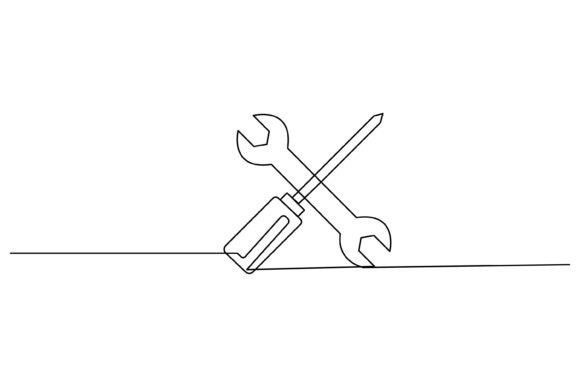
The appeal lies in its simplicity. A continuous line drawing of a screwdriver and wrench does not rely on shading, complex gradients, or heavy textures. Instead, it depends on contour and flow. When drawn on a clean white background, the black line stands out sharply, creating high contrast that is easy for the human eye to process quickly. This makes it an excellent choice for logos, icons, and decorative elements where clarity is paramount.
Why Minimalist Tool Art Resonates
There is a psychological comfort in minimalism. In an era of information overload, clean designs offer a visual breath of fresh air. The continuous line design of screwdriver and wrench communicates craftsmanship, precision, and reliability without shouting. It suggests that the brand or project behind it values efficiency and elegance.
For small business owners in trades, construction, or DIY education, using such imagery helps bridge the gap between rugged utility and modern professionalism. It moves away from the cluttered, aggressive aesthetics often associated with hardware marketing and toward a more approachable, sophisticated look. This shift can attract a broader audience, including younger homeowners and tech-savvy consumers who appreciate good design.
Versatile Applications for Creators and Businesses
One of the greatest strengths of this art style is its adaptability. Because the design is essentially a vector path, it scales infinitely without losing quality. Here are several practical ways you can integrate these assets into your work:
- Brand Identity: Use the screwdriver icon as part of a logo for a repair service, handyman app, or home improvement blog. The single-line style ensures it remains legible even when shrunk down for a favicon or social media profile picture.
- Web Design: Incorporate the SVG file as a decorative divider or section header on a website. Its linear nature complements modern, flat-design interfaces beautifully.
- Print Materials: From business cards to brochures, the high-contrast black-on-white format prints crisply on any paper stock. It adds a touch of class to invoices, quotes, and service menus.
- Educational Content: Educators and workshop leaders can use these clear illustrations in manuals or presentation slides to represent tools without distracting from the text.
- Merchandise: The simple aesthetic works well on tote bags, t-shirts, and stickers. It appeals to the "maker" community who take pride in their tools and skills.
Understanding the File Formats: EPS, SVG, and JPG
When you acquire a Continuous Line Design of Screwdriver, you will typically receive three file formats: EPS, SVG, and JPG. Knowing the difference is crucial for getting the best results in your projects.
The SVG (Scalable Vector Graphics) file is arguably the most important for digital use. It is code-based, meaning it remains sharp at any size. You can stretch it across a billboard or shrink it to a stamp size, and the lines will remain crisp. SVGs are also editable; you can change the line color or thickness directly in design software or even via CSS code on a website.
The EPS (Encapsulated PostScript) file is the standard for professional printing. If you are sending your design to a commercial printer for large-format posters or high-quality business cards, the EPS file ensures that the vector data is preserved. It is compatible with industry-standard software like Adobe Illustrator and CorelDRAW.
The JPG (Joint Photographic Experts Group) file is a raster image. While it cannot be scaled up without pixelation, it is universally compatible. You can drop a JPG into Microsoft Word, PowerPoint, or basic photo editors instantly. It is perfect for quick previews, email signatures, or social media posts where vector support might be limited.
Practical Considerations for Beginners
If you are new to using vector art, there are a few things to keep in mind to ensure your single line decorative element drawn on white looks its best. First, consider the context of the background. Since these designs are typically black lines on white, they may disappear if placed on a dark background unless you invert the colors. Most vector editing tools allow you to easily change the stroke color to white or another contrasting hue.
Second, think about line weight. In a continuous line drawing, the thickness of the line defines the visual weight. If you are using the design as a small icon, ensure the line is thick enough to be seen. Conversely, if it is a large decorative banner, a thinner line may look more elegant and refined. Experimenting with these settings in your design software can help you find the perfect balance.
Finally, respect the negative space. The beauty of continuous line art comes from what is not drawn. The gaps and loops imply the form of the screwdriver and wrench. Avoid cluttering the area around the design with other busy elements. Let the simplicity of the line stand out. White space is your friend here, enhancing the focus on the tool’s silhouette.
Enhancing Your Creative Toolkit
Integrating a Continuous Line Design of Screwdriver into your portfolio or business assets is a smart move. It signals attention to detail and an appreciation for modern design trends. Whether you are a freelancer looking to refresh your brand, a marketer creating a campaign for a home goods store, or a hobbyist starting a DIY blog, these versatile graphics provide a solid foundation.
By utilizing the provided EPS, SVG, and JPG files, you ensure that your visuals remain professional across all platforms. The seamless blend of industrial symbolism and artistic minimalism creates a memorable impression. As you explore different ways to use these elements, remember that their power lies in their restraint. They do not need to be complicated to be effective. With the right application, a simple line can tell a story of quality, craft, and innovation.